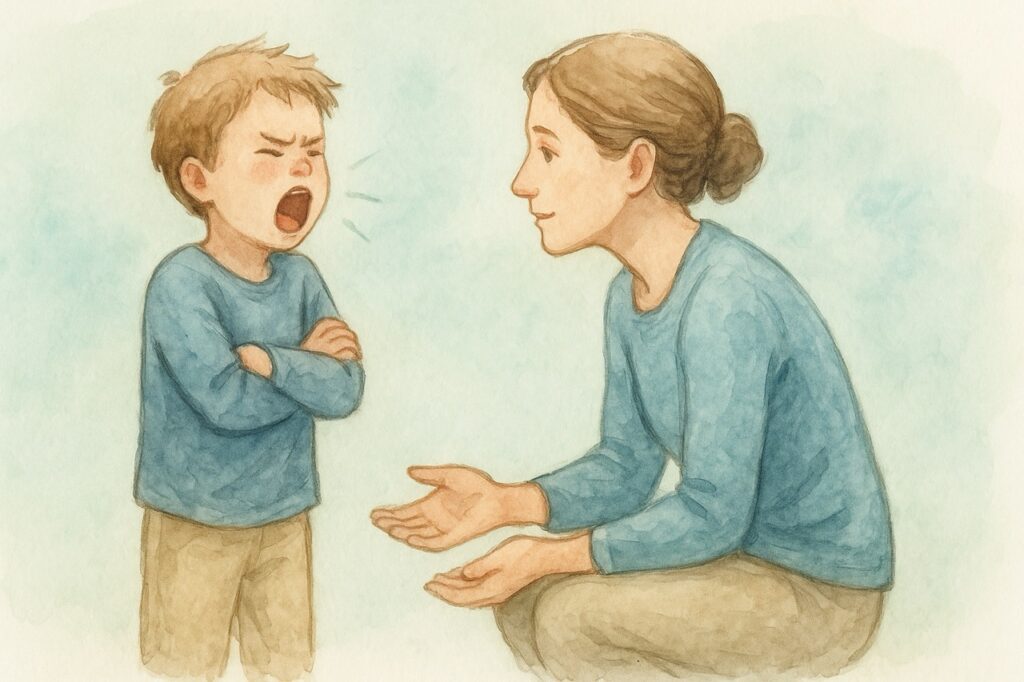
When words hurt, but closeness heals.
“You’re so stupid!”
“I hate you!”
Rolling eyes, running away, slamming doors – when children are provocative, it can hurt parents deeply. The impression quickly arises: My child doesn’t respect me.
But provocative behavior is often not an attack on you as a person – but an expression of inner distress.
Because resistance is often a cry for help in disguise.
🧠 What is behind disrespectful behavior?
Children never behave “badly” for no reason. They show with their behavior what they cannot (yet) say with words:
- Excessive demands (“I can’t!”)
- Lack of commitment (“See me!”)
- Emotional insecurity (“I need support, but don’t know how”)
- Learned model (e.g. tone of voice from daycare, school or media)
They provoke to get a reaction – because they are looking for a bond, even if they can’t show it.
❤️ How to stay in touch – even when provoked
- Stay calm – don’t take it personally:
Even if it’s difficult, your child may mean you – but it doesn’t mean your dignity. Stay the safe haven. - Address the feeling, not just the behavior:
“You’re really angry right now, aren’t you?” opens doors. “Don’t talk to me like that!” closes them. - Set boundaries lovingly:
“I hear you – and that’s not how we want to talk here.” – Clarity without shame. - Reflect together later:
Get in touch after the escalation: “What happened? How can we do it differently next time?”
🧭 Your reaction shapes the relationship – not the child’s tone
We are not allowed to demand respect – we are allowed to exemplify it , hold it and teach it in relationship.
And sometimes a child needs closeness the most – when it behaves the least.
Our workshops show you how to reach children without having to constantly repeat yourself.
Do you want to look behind the behavior – and not end up in a power struggle?
Our courses show you how to understand provocation and lead respectfully – even in turbulent times.