When repetition frustrates – and connection gets you further.
You say it for the third time. Nothing happens. You get louder. Nothing happens again.
And at some point you burst your bubble: “How many times do I have to tell you?”
This scenario is a reality in many families – and incredibly frustrating. But before you doubt yourself or your child: Not listening is rarely intentional – but usually an expression of inner disorder, overwhelm or a lack of connection.
Children hear differently. And they don’t need more announcements – they need more resonance.
🧠 Why children “don’t hear”
- Immature self-control:
Children’s brains are still developing – especially the part responsible for impulse control and attention. They often don’t “want” to buck – they just can’t regulate themselves sufficiently. - Too much speech, too little connection:
If we shout from the next room or talk too much when stressed, it gets lost. Children respond to presence, not volume. - Feeling before obedience:
If a child doesn’t feel seen or safe inside, they won’t cooperate – no matter how many times you say it.
✅ What helps if your child can’t hear?
- Contact before content:
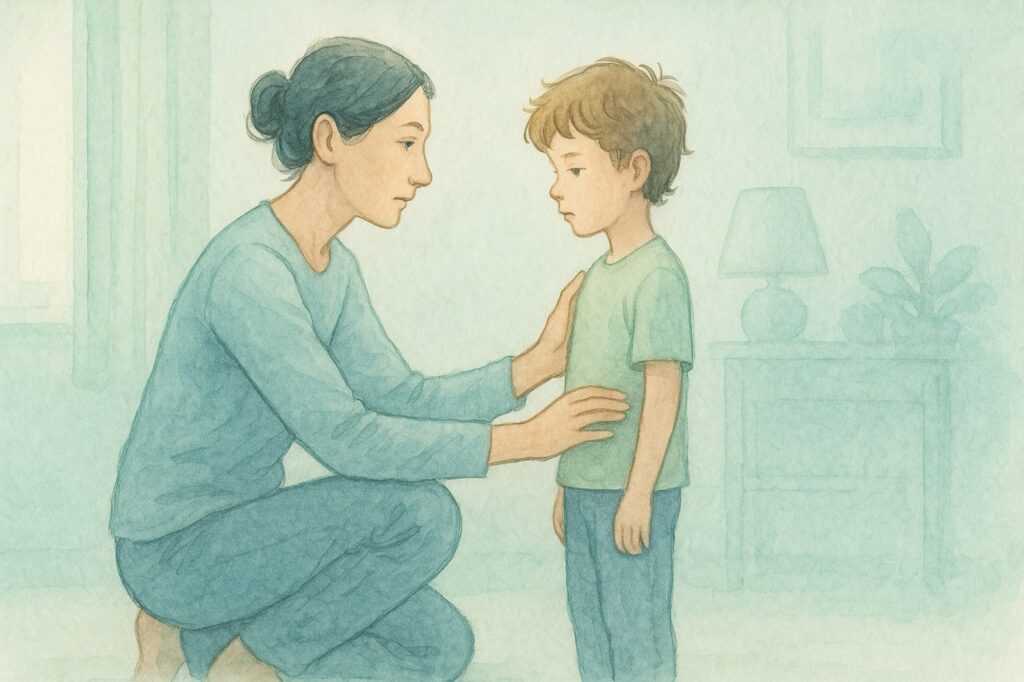
Go there. Look at your child. Speak calmly and briefly. Connection comes before instruction. - Reduce language:
Instead of long explanations, it helps to say: “Now is the time to tidy up.” – Clear, calm, firm. - Give advance warning:
Children need transitions. “We’re leaving in five minutes” works better than “Let’s go now!” - Use positive language:
Instead of “Don’t jump on the couch!”, say: “Come on, let’s keep jumping outside.” - Model behavior:
If you yourself model calm, clarity and consistency, your child will mirror this in the long term.
💡 Important: Not listening is not a power play – it’s a signal
Before you raise your voice, ask yourself:
What does my child need right now in order to relate?
Because parenting is not assertiveness – it’s leadership through connection.
Our courses help you to lovingly promote bonding and honesty – without power games.
Do you want less repetition – and more cooperation in everyday life?
Our workshops show you how to reach children without constantly having to repeat yourself.